<
>
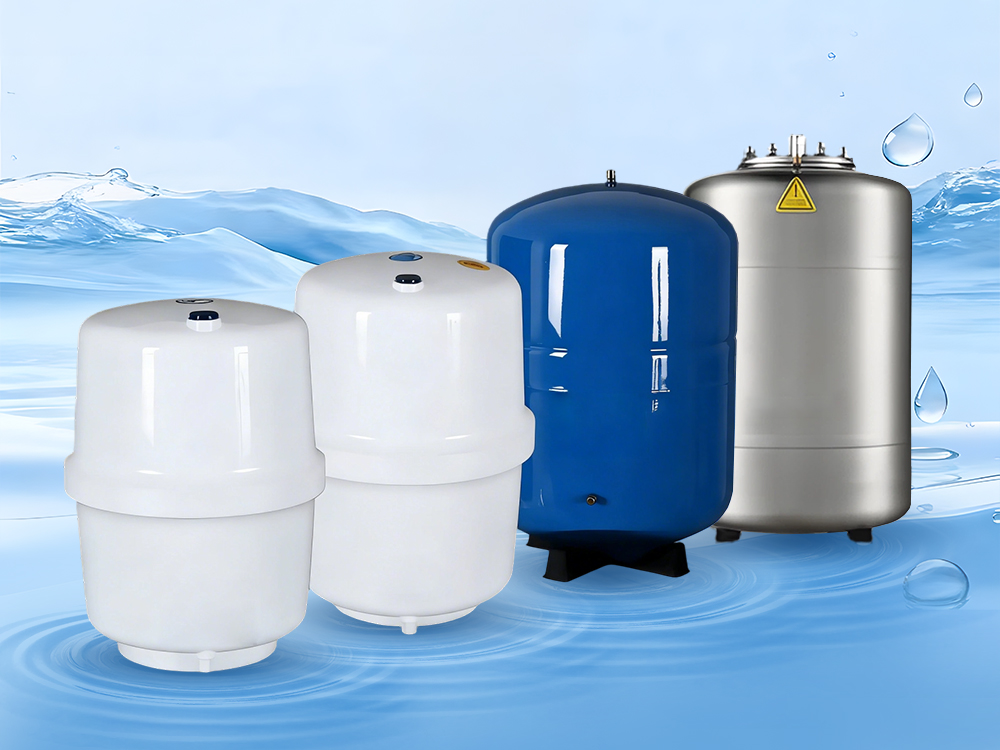


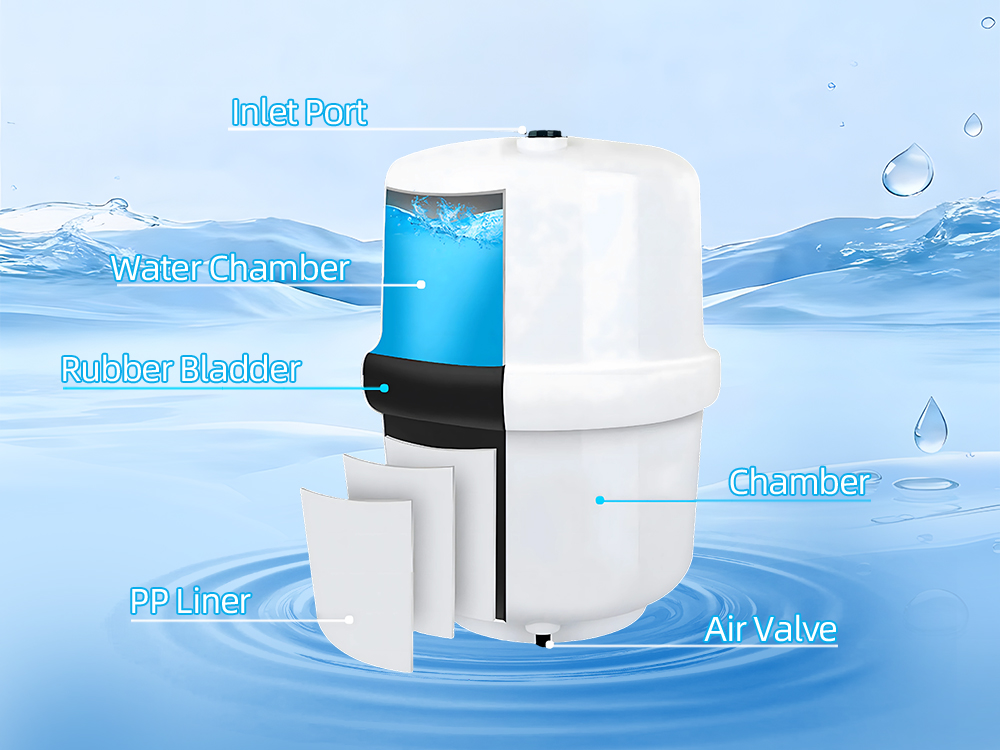
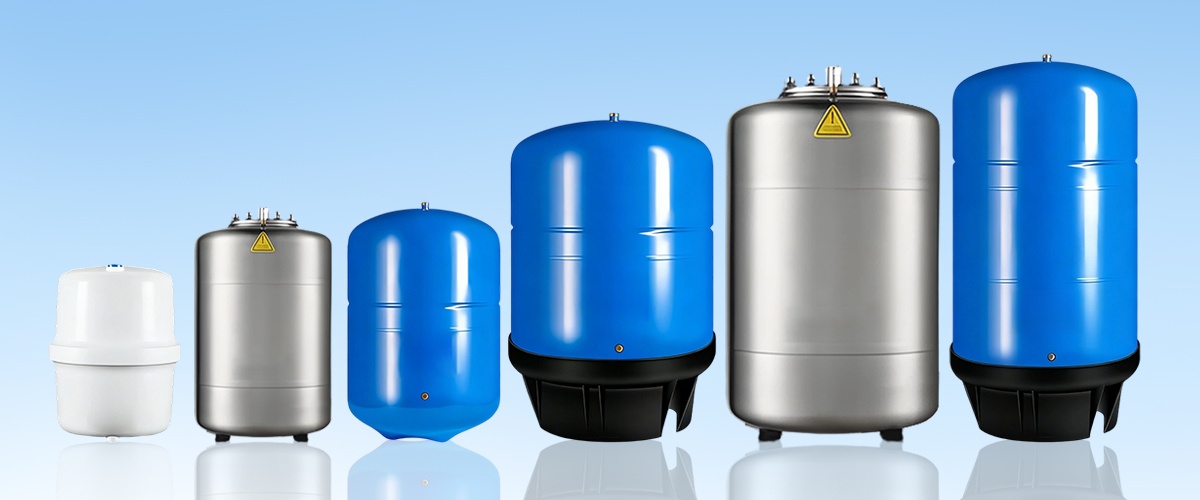
The RO pressure tank is designed to store purified water produced by reverse osmosis systems. By compressing air inside the tank through an internal bladder, it maintains stable water pressure and ensures continuous water flow when the faucet is opened.
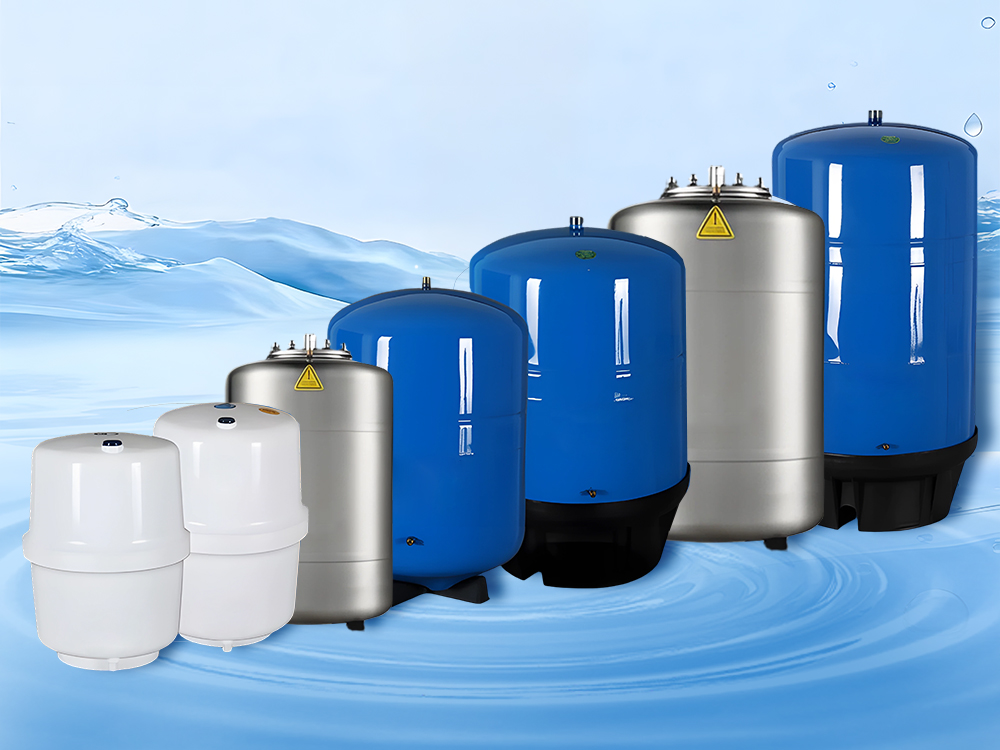
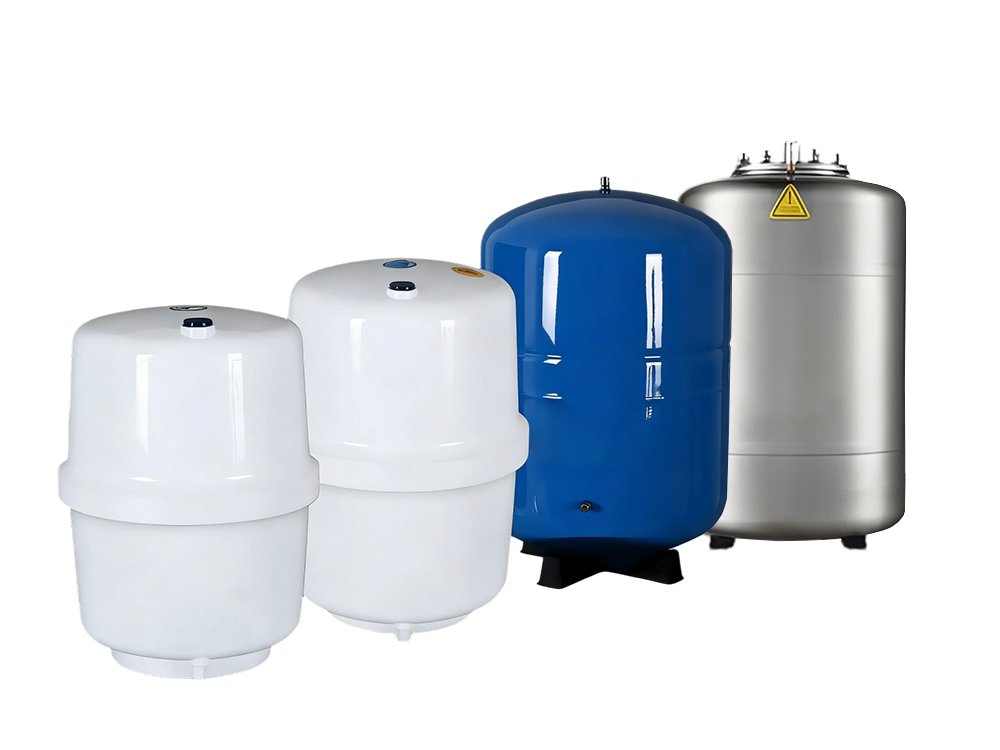
The tank features a high-strength structure with optional painted carbon steel or stainless steel shell. All water-contact components are made from food-grade materials to ensure safe and hygienic water storage. Each tank undergoes strict pressure testing before leaving the factory and can withstand pressures up to 1 MPa.
It is widely used in household RO systems, drinking water purification systems, and small commercial filtration setups. Since ultrafiltration systems operate without pressure storage, this tank is specifically designed for RO systems with booster pumps.
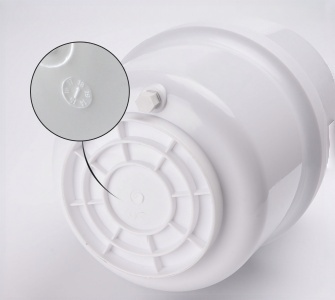
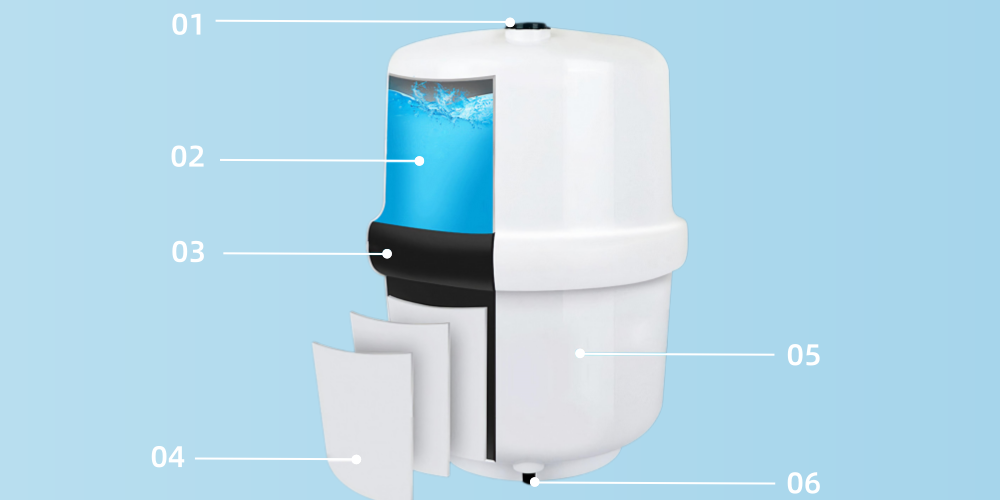
Bottom Production Marking
Helps identify production date
and prevent aging
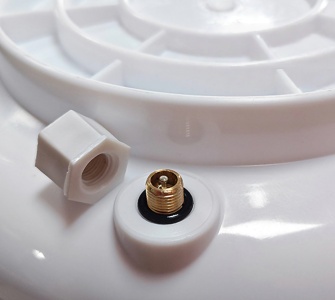
Enhanced Sealing Valve Core
Improves bladder sealing,
reduces air leakage
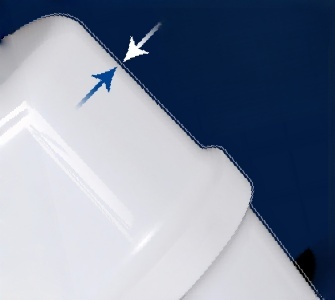
High Pressure Resistance
Streamlined design,
tested up to 1 MPa
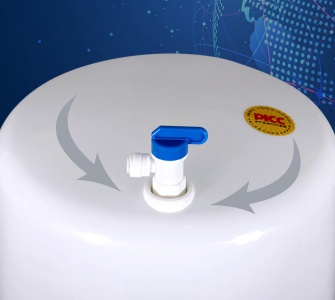
Recessed Valve Protection
Reduces valve exposure
and prevents breakage
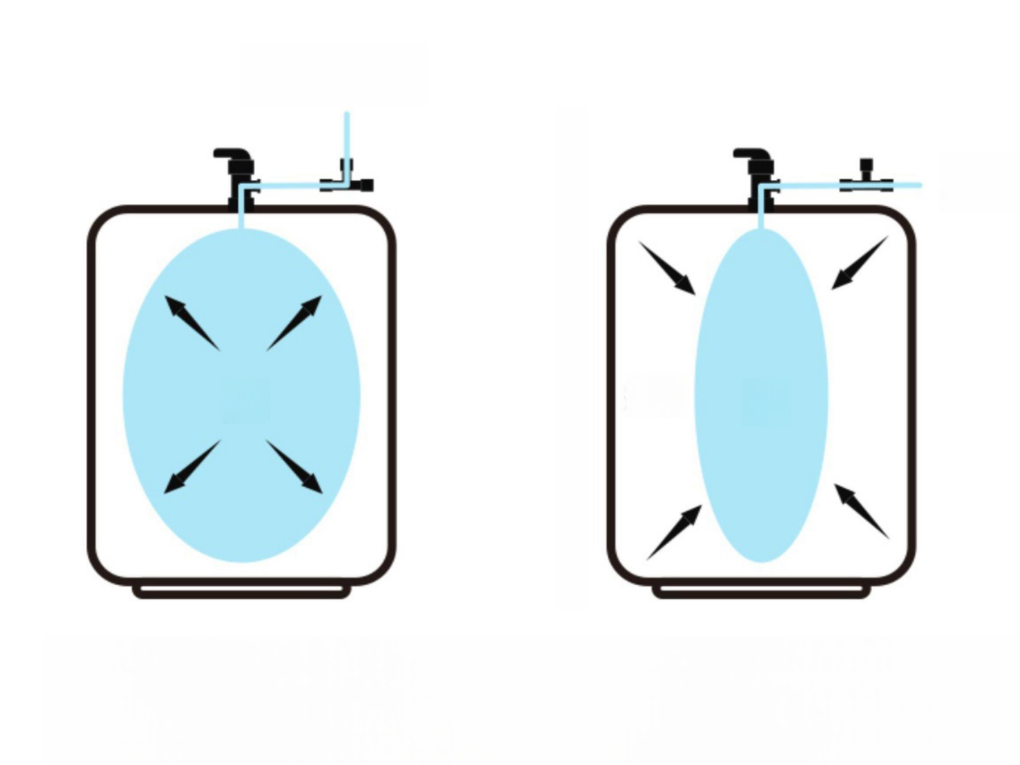
When purified water from the RO system enters the pressure tank, it compresses the air inside the tank. As the air pressure increases and reaches equilibrium with the inlet pressure, the system stops filling.
When the faucet is opened, the compressed air expands and pushes the water out of the bladder, providing stable water pressure for use.
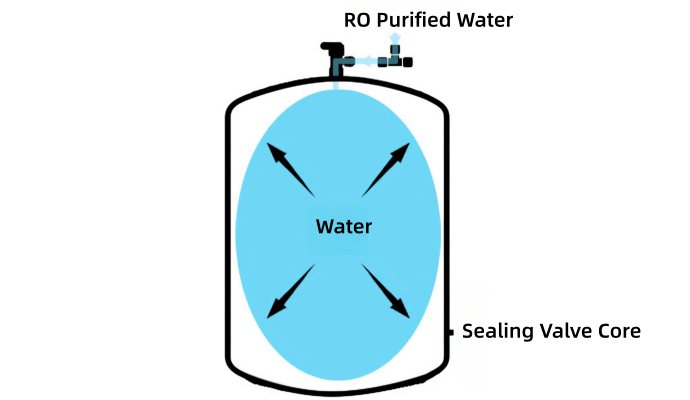
Storage Process
Water enters the tank and compresses the air inside
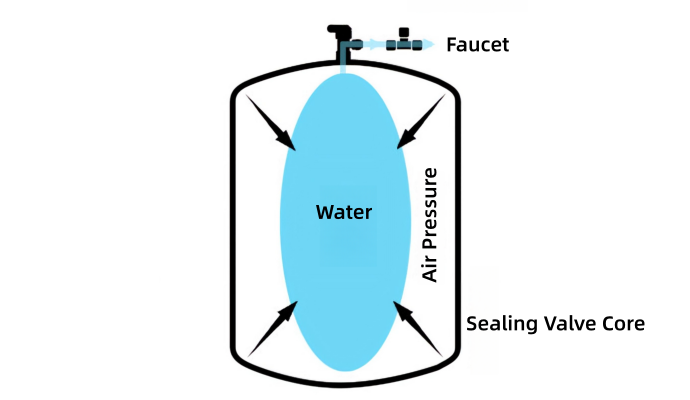
Dispensing Process
Compressed air pushes water out of the tank
1.Remove the tank from the carton and remove the protective film and inlet cap;
2.Install the ball valve onto the tank inlet and tighten it by hand;
3.Connect the PE water pipe;
4.Turn on the water supply and check for leakage;
5.Wrap PTFE sealing tape around the thread if necessary.
First Use
After the tank is filled for the first time, drain the entire tank of water to flush the tank liner and RO post carbon filter.
Routine Maintenance
It is recommended to drain the tank once a month to maintain hygienic storage conditions.
After Filter Replacement
Drain the tank once after replacing the filters to clean the internal pipeline system.
Install the valve correctly to avoid cross-threading.
Turn off the water inlet valve if leaving home for long periods.
Ensure the RO system high-pressure switch works properly.
Operating temperature: 1–45°C.
Avoid prolonged direct sunlight exposure.
1. How much water can the tank store?
The rated capacity refers to the tank volume. Actual water storage is typically 50–70% depending on inlet pressure.
2. Does the pressure tank need air charging?
New tanks are pre-charged at the factory and usually require no additional inflation.
3. Can a leaking pressure tank be repaired?
If the internal bladder is damaged and leaks air, the tank normally needs to be replaced.